
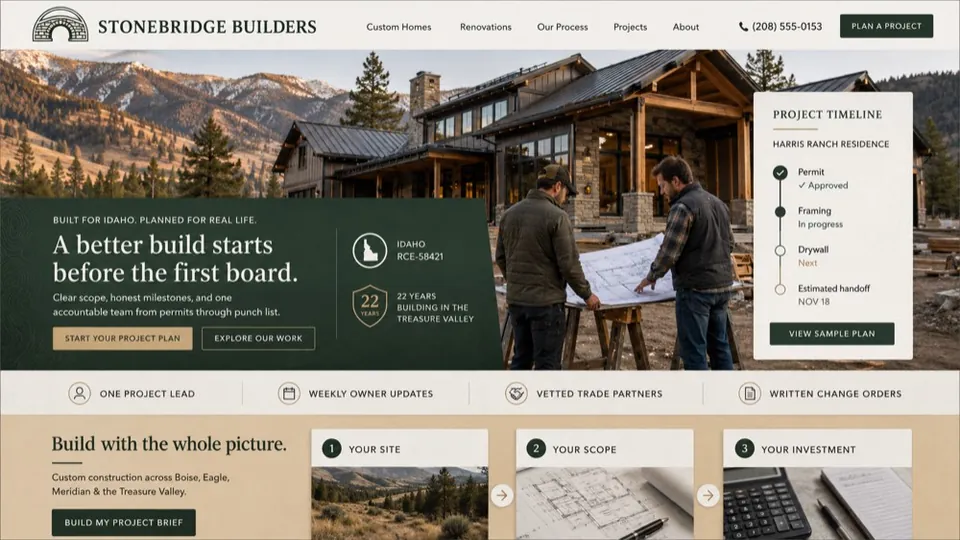
Where general contractors lose projects
Not on the build. In the slow stretch between the first call and the contract, and in the silence after the last invoice.
You walk the site, promise a number by Friday, and the week eats you alive. By the time it goes out, the client assumes you were not interested.
✓Proposal timelines and automated status updates so the client hears from you before they hear from the next contractor.The no-budget, no-permit, no-timeline lead gets the same site visit as the $250,000 addition.
✓AI intake that asks about scope, budget range, timeline, and permits before a person spends an afternoon.The homeowner texts at 9pm asking what happens Monday, again, and your project manager answers instead of planning.
✓Automated milestone updates and schedule texts that keep clients informed without a phone call.The property manager who used you for one build-out hires whoever emailed most recently.
✓Stay-in-touch campaigns for past clients and commercial accounts that keep you first in line for the next job.One connected system
What we build for general contractors
One system that qualifies the lead, keeps the proposal moving, communicates during the build, and stays in touch after.
A website with project galleries built to turn addition, build-out, and renovation searches into qualified inquiries.
Missed-call text-back so a call you take at a job site does not become a lost proposal.
AI chat and voice that qualify scope, budget range, timeline, and permits before the walkthrough.
Proposal follow-up sequences that keep a bid alive through a long decision.
Milestone and schedule updates that keep clients informed during the build.
A CRM pipeline that separates residential, commercial, and repeat-account work so nothing sits.
Review and referral requests at project close, while the finished work is still new.
Local SEO and Google Business Profile work so you show up for contractor searches in your area.
The pieces, explained: websites · missed-call text-back · the AI receptionist · follow-up automation · reviews · local SEO
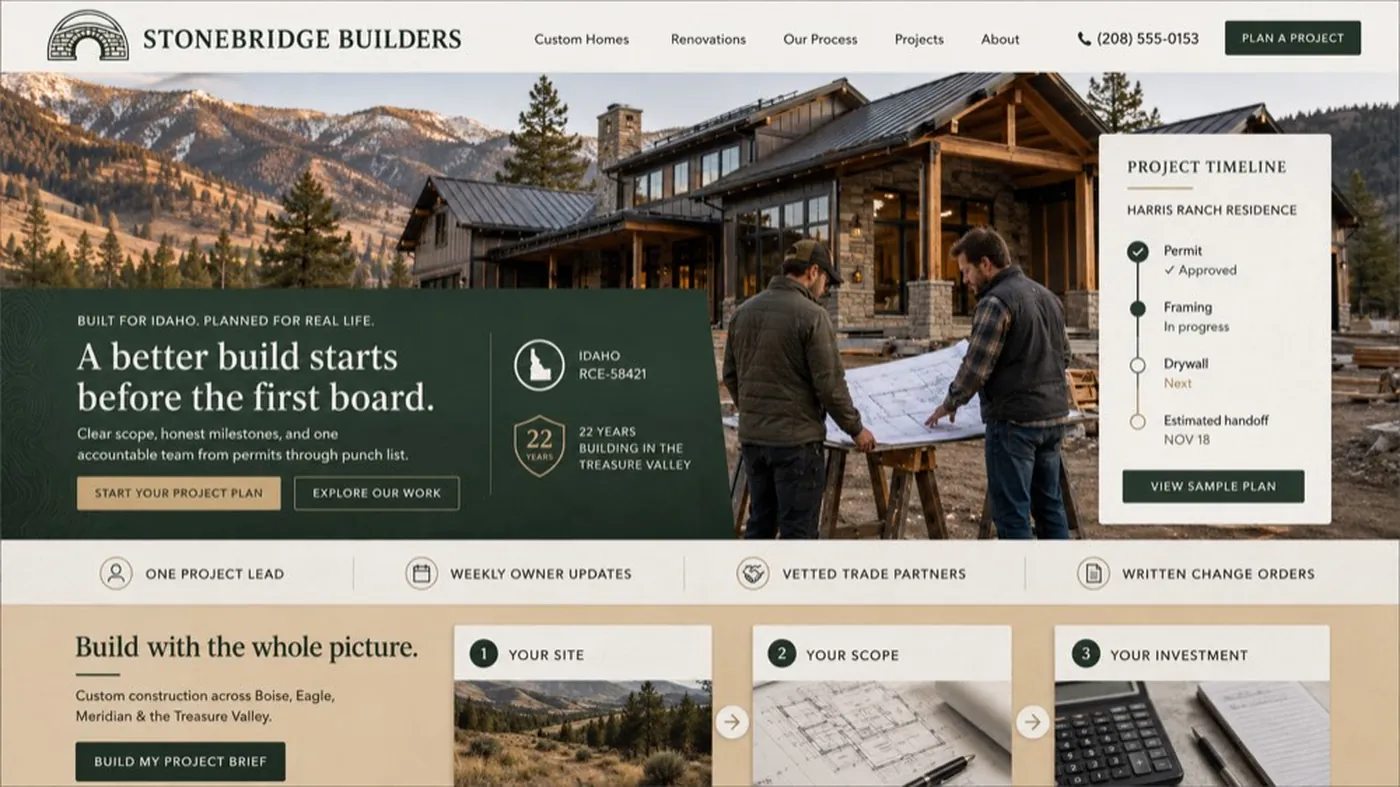
Watch it run
How it works on an addition inquiry
A real example of the system carrying one project from the first form to a signed contract and a repeat client.
8:05am: a homeowner submits “Looking for a GC for a second-story addition, hoping to start by summer.” Your system replies in seconds and asks about scope, budget range, and timeline.
It books the walkthrough for Wednesday and sends you the answers, so you arrive knowing the budget is real.
After the walkthrough, the system tells the client when to expect the proposal and follows up after it goes out, at the points where a GC usually goes quiet.
They sign. During the build, schedule updates go out at each milestone, and an inspection date change is texted automatically.
At close, a review request goes out, and the client enters a stay-in-touch track for the next project they will need.
Common questions
Do you work with our construction management software?
Where it makes sense, yes. What we build can be configured to work with tools like Buildertrend, CoConstruct, and Procore, so leads, proposals, and client updates flow through one system. We connect the rest so your website, phone, and CRM work as one.
We do commercial and residential. Can the system handle both?
Yes. The pipeline separates them, with different qualifying questions and follow-up for a homeowner addition versus a tenant build-out. A property manager gets a different track than a first-time homeowner.
Our estimator already follows up. What changes?
The system follows up when your estimator cannot: the night the proposal goes out, the second week, the fifth week. It also logs every touch, so when the client calls back, you know exactly where things stand.
How much of this needs my office staff?
Very little once it is running. Intake, scheduling, follow-up, and client updates happen automatically, and the office steps in for the conversations that need a person.
Does timing matter for construction leads?
Yes. Homeowners tend to plan additions in winter for spring starts, and commercial work follows lease dates. The system captures the surge in inquiries and keeps the slow-season leads warm so you are not rebuilding the pipeline every spring.
See where your proposals are going quiet.
Book a call. We will map where walkthroughs and proposals are slipping away and show you what we would connect first.